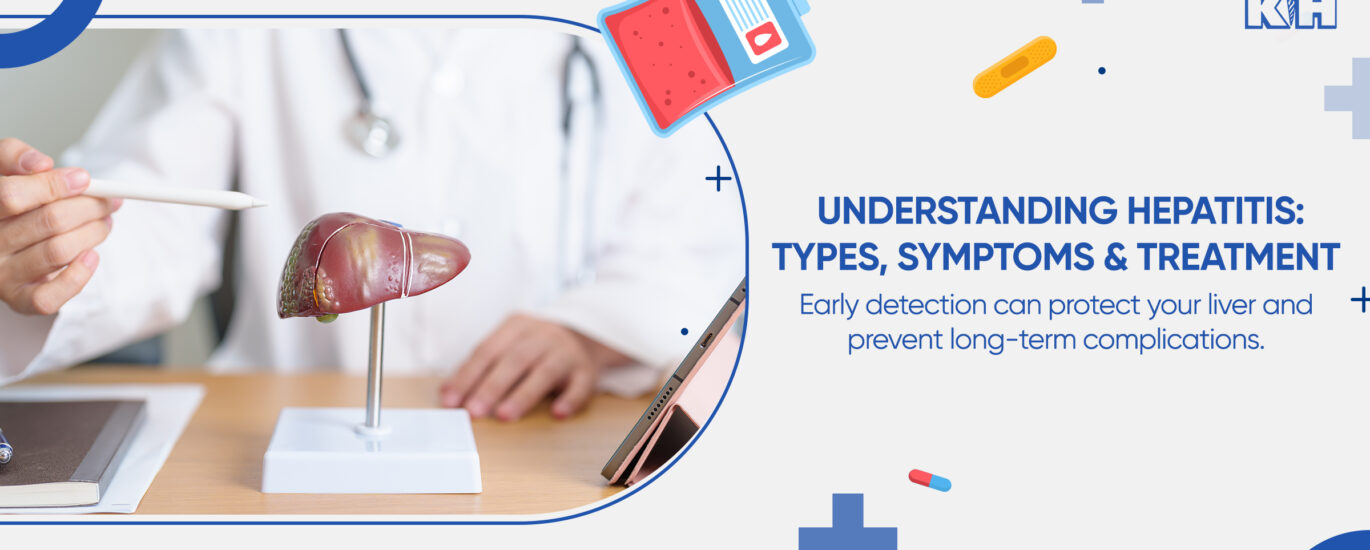
Your liver works silently every single day. It filters toxins (harmful substances), helps digest food, stores nutrients, and supports immunity. When the liver becomes inflamed (swollen due to irritation or infection), the condition is called hepatitis.
Understanding the types of hepatitis is essential because not all hepatitis infections behave the same way. Some are short-term and resolve on their own. Others can silently damage the liver for years before symptoms appear.
According to the World Health Organization (WHO), viral hepatitis remains a major global health concern, with millions affected worldwide. In India, awareness and early screening are critical to prevent long-term liver complications.
What Is Hepatitis and Why Does It Matter?
Hepatitis simply means inflammation (swelling) of the liver. Inflammation happens when the liver is attacked by viruses, alcohol, certain medications, or when the immune system mistakenly damages liver cells (autoimmune hepatitis).
Among all causes, viral infections account for the most common types of hepatitis — specifically Hepatitis A, B, C, D and E.
Some forms are acute (short-term). Others become chronic (long-lasting), which can lead to:
- Cirrhosis (permanent scarring of the liver)
- Liver failure (loss of liver function)
- Liver cancer
If untreated, chronic hepatitis can silently progress for years. That’s why understanding symptoms and early testing is vital.
The 5 Major Types of Hepatitis Explained
1. Hepatitis A (HAV)
Hepatitis A spreads mainly through contaminated food and water. This makes hygiene and sanitation extremely important in densely populated areas.
According to the Centers for Disease Control and Prevention (CDC), Hepatitis A does not cause chronic disease. Most people recover completely within weeks.
Common symptoms include:
- Fever
- Nausea
- Loss of appetite
- Dark urine
- Jaundice (yellowing of eyes and skin)
There is an effective vaccine available, which makes this one of the most preventable types of hepatitis.
2. Hepatitis B (HBV)
Among the different types of hepatitis, Hepatitis B is more serious because it can become chronic.
It spreads through:
- Blood contact
- Sexual transmission
- From mother to baby during childbirth
- Sharing needles
The WHO fact sheet on Hepatitis B highlights that chronic Hepatitis B can lead to cirrhosis and liver cancer.
While there is no complete cure for chronic Hepatitis B, antiviral medications can control the infection and reduce liver damage.
The good news? Vaccination is highly effective and widely recommended.
3. Hepatitis C (HCV)
Hepatitis C is primarily transmitted through infected blood. Many people remain unaware they have it because symptoms can be mild or absent for years.
The National Institute of Diabetes and Digestive and Kidney Diseases (NIDDK) explains that modern antiviral therapy can cure more than 95% of cases.
Unlike some other types of hepatitis, there is currently no vaccine for Hepatitis C. Early testing is therefore extremely important.
4. Hepatitis D (HDV)
Hepatitis D only occurs in people who already have Hepatitis B. It cannot exist independently.
This co-infection (two infections together) increases the risk of severe liver damage and faster progression to cirrhosis.
Vaccination against Hepatitis B automatically protects against Hepatitis D.
5. Hepatitis E (HEV)
Hepatitis E spreads similarly to Hepatitis A, through contaminated water and food.
It usually causes acute infection and resolves on its own. However, it can be dangerous in pregnant women and people with weakened immunity.
Common Symptoms Across Different Types of Hepatitis
Although the types of hepatitis differ, many symptoms overlap.
Early signs may include:
- Fatigue (extreme tiredness)
- Loss of appetite
- Nausea or vomiting
- Mild abdominal pain
- Dark urine
- Pale stools
- Jaundice
Dark urine occurs because bilirubin (a yellow pigment processed by the liver) builds up in the blood and passes into urine.
Many patients ignore early symptoms because they resemble common viral illness. That delay can be risky in chronic cases.
How Hepatitis Affects Long-Term Liver Health
When hepatitis becomes chronic, it gradually damages liver cells. The body attempts to repair this damage, but repeated injury leads to fibrosis (formation of scar tissue).
If fibrosis progresses, it becomes cirrhosis (advanced scarring). At this stage, liver function declines significantly.
For patients already dealing with fatty liver disease, the risk can be higher. You can understand how nutrition impacts liver recovery in this detailed guide on fatty liver diet planning.
If cirrhosis or advanced liver disease develops, specialised care becomes essential. In severe cases, evaluation for liver transplantation may be required.
How Is Hepatitis Diagnosed?
Diagnosis involves simple blood tests that detect viral markers (substances in blood that indicate infection).
Doctors may check:
- Liver enzyme levels (to measure inflammation)
- Viral load (amount of virus in blood)
- Antibodies (immune response markers)
In chronic cases, ultrasound or specialised scans may assess liver damage.
If you have persistent symptoms or belong to a high-risk group, early testing at a trusted centre like Kumaran Hospitals can help prevent complications.
Prevention: Protecting Yourself and Your Family
Prevention strategies differ based on the types of hepatitis:
Vaccination
- Available for Hepatitis A and B.
- The Hepatitis B vaccine also protects against Hepatitis D.
Hygiene
- Drink clean water.
- Wash your hands thoroughly.
- Avoid undercooked seafood.
Safe Practices
- Avoid sharing razors or needles.
- Ensure sterile medical equipment.
- Practice safe sex.
Regular screening is particularly important if:
- You have a family history of liver disease
- You received blood transfusions before 2000
- You have diabetes or obesity
- You consume alcohol regularly
When Should You See a Specialist?
Seek medical advice if you notice:
- Yellowing of eyes
- Persistent fatigue
- Unexplained weight loss
- Swelling in abdomen
- Ongoing digestive discomfort
Early consultation prevents long-term damage.
Final Thoughts
Understanding the types of hepatitis is not just medical knowledge — it’s protection for your long-term liver health. Some forms are preventable through vaccination. Others are manageable if diagnosed early.
If you or your family members experience symptoms or belong to a risk group, don’t delay evaluation. Take proactive steps today.
Frequently Asked Questions
The five major viral types of hepatitis are A, B, C, D and E. Each spreads differently and affects the liver in unique ways.
Chronic Hepatitis B currently has no complete cure but can be managed. Hepatitis C, however, is curable in most cases with modern antiviral therapy.
Hepatitis A spreads through contaminated food/water and is usually short-term. Hepatitis B spreads through blood and bodily fluids and may become chronic.
Common early symptoms include fatigue, nausea, loss of appetite, abdominal pain, dark urine, pale stool, and jaundice.
These represent the five main viral types of hepatitis, each caused by a different virus affecting liver health differently.
Through blood tests that detect viral infection and assess liver inflammation.
Because bilirubin builds up in the bloodstream when the liver cannot process it properly.
Hepatitis D occurs only in people who already have Hepatitis B and can worsen liver damage.