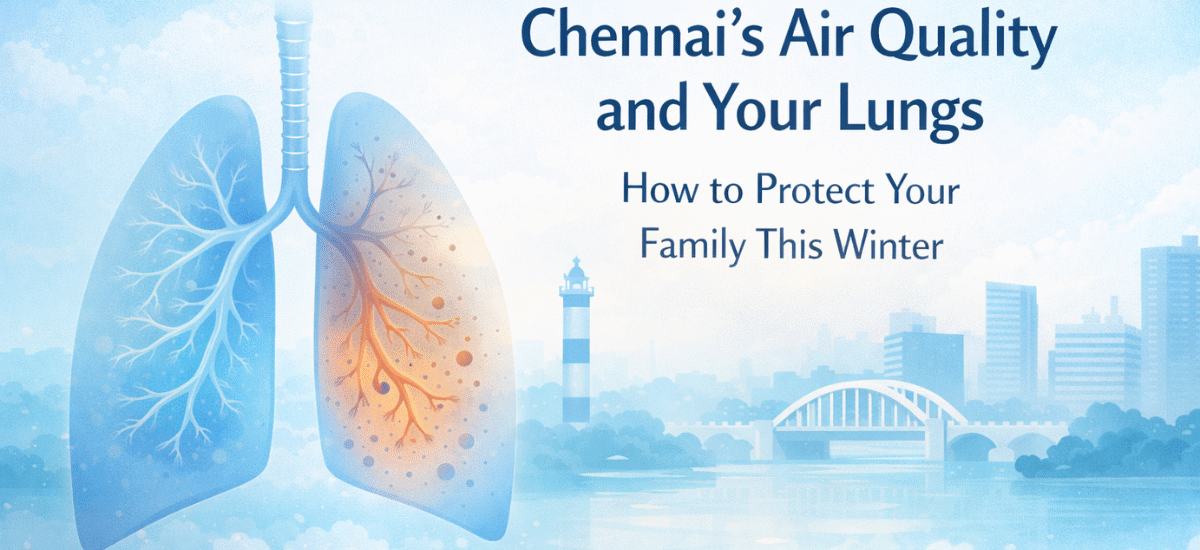
Every winter, the morning air in Chennai feels a little heavier. That mist you see near the Marina or Anna Nagar isn’t always harmless fog — it often carries pollution particles from vehicles, waste burning, and festive smoke.
While Chennai’s air isn’t as severe as Delhi’s, recent reports from the Tamil Nadu Pollution Control Board (TNPCB) reveal that the city’s Air Quality Index (AQI) often dips into “moderate” to “poor” levels during cooler months.
For patients with asthma, COPD, or bronchitis, even “moderate” pollution can trigger breathing problems. And for healthy families, constant exposure can still impact long-term lung function.
This article from Kumaran Hospitals, the best multispeciality hospital in Chennai, will help you understand:
- What Chennai’s air quality really means
- How it affects your lungs and overall health
- Who’s most at risk
- And how to keep your family safe this winter
What Is Air Quality, and Why Should You Care?
“Air quality” refers to how clean or polluted the air is. It’s measured by the Air Quality Index (AQI), a simple number that reflects how safe (or unsafe) the air is to breathe.
The major pollutants tracked are:
- PM2.5: Ultra-fine particles that travel deep into your lungs.
- PM10: Dust and larger particles that irritate the eyes, nose, and throat.
According to TNPCB data, Chennai’s PM2.5 levels during winter range from 35–45 µg/m³, which exceeds the World Health Organization’s (WHO) safe guideline of 5 µg/m³.
Sea breezes often improve Chennai’s air quality, but after festivals like Diwali and Bhogi, smoke and dust can cause temporary spikes. These are the days when even healthy individuals can feel short of breath or develop throat irritation.
How Does Poor Air Quality Affect Your Lungs and Health?
The effects of air pollution on human health are both short- and long-term, and the lungs are among the first organs to be affected.
Short-term effects
- Coughing, sneezing, throat irritation
- Eye burning and watery eyes
- Wheezing or difficulty breathing
- Headaches or fatigue
Long-term effects
- Increased risk of asthma, COPD, and chronic bronchitis
- Reduced lung function over time
- Greater strain on the heart and blood vessels
Research from the World Health Organization shows that air pollution contributes to nearly 7 million premature deaths worldwide each year. Long-term exposure can lead to inflammation in the lungs similar to what smoking causes.
Who Is Most at Risk from Chennai’s Winter Pollution?
Certain groups need to be extra cautious during Chennai’s winter months:
Children
Their lungs are still developing, and they breathe faster — inhaling more pollutants per kilogram of body weight.
Elderly people
With weaker immunity and pre-existing heart or lung issues, older adults can easily develop a cough or bronchitis.
Asthma & COPD patients
Polluted air narrows their airways and triggers asthma attacks or COPD flare-ups, leading to hospital visits.
Pregnant women
High PM2.5 exposure can affect fetal growth and increase preterm birth risk.
Outdoor workers and commuters
Traffic police, delivery staff, and construction workers are exposed to prolonged levels of exhaust fumes and dust.
If you or a family member falls into one of these categories, take preventive action before symptoms worsen.
How to Know If Air Quality Is Affecting You
It’s easy to miss the early signs of poor air quality. Watch for:
- Persistent coughing or throat dryness
- Chest heaviness or pain when breathing deeply
- Fatigue or dizziness
- Red, watery eyes
- More frequent inhaler use (for asthma patients)
If these symptoms appear on days when AQI exceeds 100, it’s likely due to pollution-related respiratory irritation.
5 Doctor-Recommended Ways to Protect Your Lungs This Winter
1. Wear the right mask outdoors
Use N95 or KN95 masks on dusty or smoky days (AQI above 150). Cloth masks or scarves don’t block fine particles like PM2.5.
2. Keep your indoor air clean
- Use air purifiers with HEPA filters.
- Keep windows closed early in the morning and late at night.
- Avoid incense, mosquito coils, or open burning inside.
3. Add greenery at home
Plants like Areca Palm, Snake Plant, and Peace Lily help purify air naturally and improve oxygen quality indoors.
4. Eat to strengthen your lungs
- Eat foods rich in Vitamin C and E (oranges, amla, spinach).
- Add omega-3 fatty acids (fish, flaxseeds) to reduce inflammation.
- Stay hydrated, it helps your body flush out pollutants.
5. Plan activities wisely
Check AQI before outdoor exercise or playtime. Avoid heavy traffic zones during rush hour.
When Should You Visit a Doctor?
Seek immediate medical care if you experience:
- Difficulty breathing or tightness in the chest
- Wheezing that doesn’t ease with inhalers
- Dizziness or chest pain during poor-air days
- Persistent cough lasting over two weeks
As a 24/7 hospital in Chennai, Kumaran Hospitals offers:
- Complete respiratory and emergency care
- Advanced lung function tests (spirometry)
- Nebulization, oxygen therapy, and intensive care for severe cases
- Home health care services in Chennai for patients needing respiratory monitoring or oxygen support at home.
Our Emergency Department operates around the clock, making Kumaran Hospitals one of the most trusted emergency hospitals in Chennai.
Conclusion:
While Chennai’s winter air isn’t as harsh as northern India’s, even moderate pollution can harm your lungs over time. Protect your family with small, daily habits: check AQI, wear masks, and purify your indoor air.
If you or a loved one has asthma, allergies, or breathing issues, get proactive care early.
At Kumaran Hospitals, Our team is to support you with advanced diagnostics, 24/7 emergency care, and compassionate health specialists.Book a consultation today or explore our home health care services in Chennai to ensure your family breathes easy this winter and beyond.
References
- World Health Organization – Air Pollution & Health
- National Institute of Environmental Health Sciences
- CPCB Air Quality Dashboard
- Mayo Clinic, Asthma and Air Pollution
- IQAir – Chennai AQI Data
Frequently Asked Questions
Poor air quality causes lung inflammation, triggers coughing and wheezing, and worsens chronic respiratory diseases like asthma and COPD.
It can cause breathing problems, eye irritation, fatigue, lung infections, and heart stress. Long-term exposure can lead to chronic bronchitis or reduced lung capacity.
An AQI above 100 affects sensitive individuals; above 150 is unhealthy for everyone.
Yes. Polluted air carries fewer oxygen molecules, making you feel tired or dizzy.
Persistent coughing, shortness of breath, or chest tightness, especially on hazy or smoky days, are clear indicators.